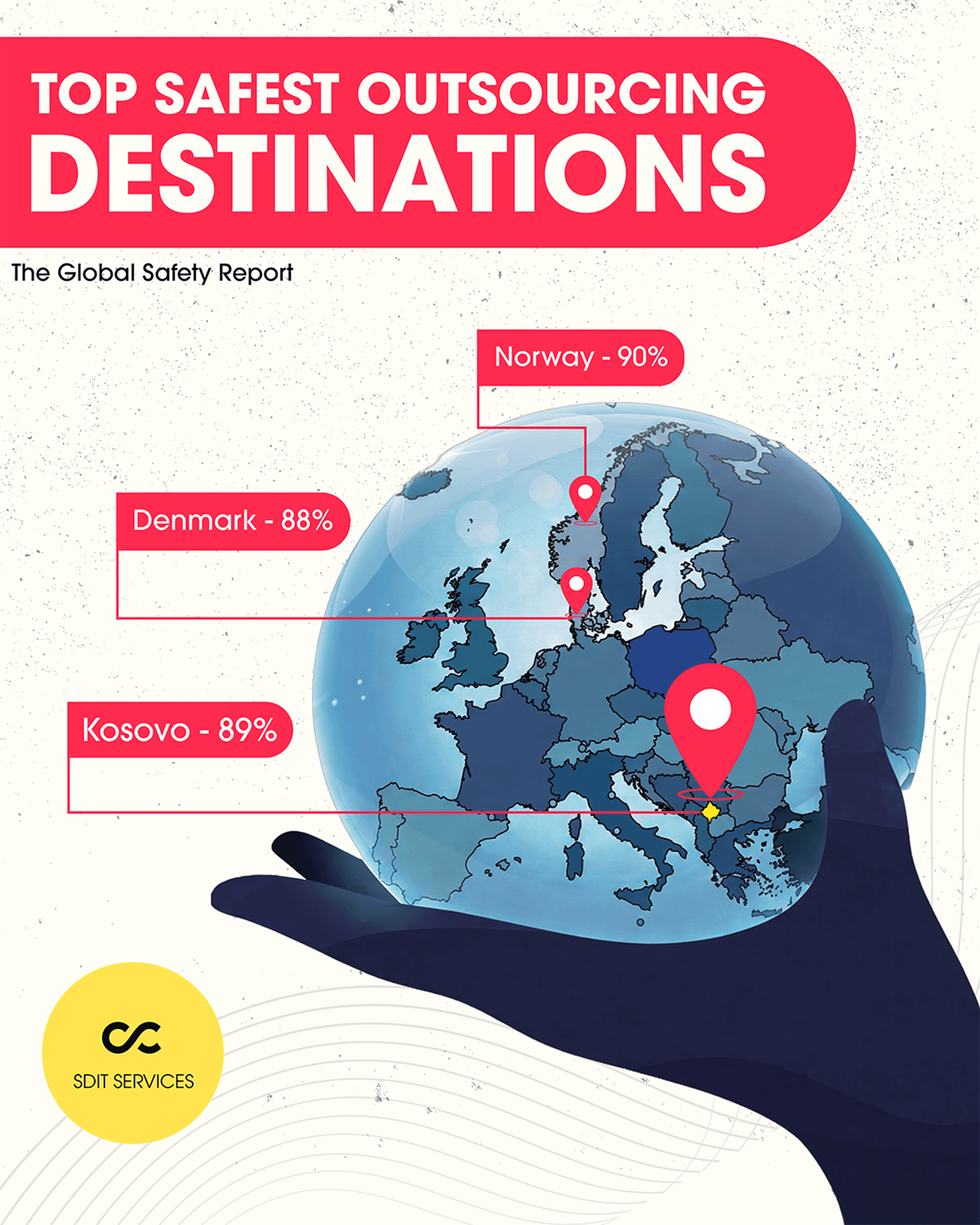
Why Outsourcing in Kosovo Is on the Rise
Kosovo has quietly become one of Europe’s most attractive near-shore destinations for customer support, technical support, and fintech/KYC operations. This article explains why momentum is building, what functions perform best, and how to launch a low-risk pilot that shows ROI in 30–60 days.
OPERATIONS
SD IT Services
6/24/20253 min read


The short version — Kosovo’s value proposition
Near-shore time zones with the EU/UK and strong overlap with US hours.
English-first talent (plus German/Italian/Arabic in many teams) with a service mindset.
STEM-heavy graduate pool and a large diaspora returning with international experience.
Material cost advantage vs. Western Europe and the US (often 30–60% lower total run-rate).
Modern toolset literacy: Zendesk, Intercom, Slack, Jira/Confluence, Salesforce, Shopify, WordPress.
Process maturity—GDPR-aware operations, QA programs, CSAT tracking, and clear SLAs.
Put simply: you get European proximity and quality, without the overhead or timezone pain of far-shore models.
Where Kosovo shines
1) Customer Support (Tier 1–2)
Multichannel coverage: chat, email, phone, and social.
First-response and resolution metrics that match EU/UK expectations.
Strong empathy, written clarity, and brand tone control.
2) Technical Support (Tier 1–3)
SaaS onboarding, environment triage, basic debugging, and escalations.
Familiarity with ticketing/issue-tracking workflows (Zendesk/Jira).
Clear playbooks for L1→L2→L3 handoffs to keep work crisp and measurable.
3) Fintech/KYC Operations
Identity verification checks, document review, and audit-ready workflows.
Fraud alerts, escalation paths, and compliance documentation.
Secure processes and access controls aligned with GDPR.
4) Back Office & RevOps
Data cleaning, enrichment, entitlement checks, and billing support.
Product catalog maintenance for e-commerce and marketplace sellers.
Talent quality (and why it’s improving)
Kosovo invests heavily in STEM education and vocational programs. Many professionals have studied or worked in the EU/UK/US and bring back language fluency and service culture. For support and ops roles, that translates to:
Clear written English and clean documentation habits.
Comfort with modern SaaS and no fear of learning.
Coachability: feedback loops, QA rubrics, and 1:1s move the needle quickly.
Time-zone advantage, done right
For EU/UK companies, Kosovo is same-day or +1 hour in most cases. For US teams, overlapping shifts or split coverage give you 8–12 hours of meaningful collaboration without graveyard fatigue. Many programs run:
Core pod hours that match your internal team.
Extended 16×5 or 24×7 coverage using two pods.
Follow-the-sun for incident response and status updates.
Cost structure you can plan around
Most programs we see use one of two models:
Agent-hours with a clear monthly cap (e.g., up to 120 agent-hours per month).
Dedicated pod (3–8 agents + lead) with fixed capacity and weekly cadence.
Either way, budgets are simple, transparent, and include training time, QA, reporting, and tooling administration. Most teams realize 30–60% savings vs. hiring in Western Europe or North America—without sacrificing quality.
Savings are meaningful, but time-to-value is often the bigger win: pilots go live in 2–4 weeks, not quarters.
Security, compliance, and process hygiene
The better providers operate with:
GDPR-aware workflows and DPA addenda.
Role-based access, MFA, and least-privilege principles.
QA programs with rubric-based scoring and calibration.
SLA dashboards for FRT/AHT/FCR/CSAT and incident metrics.
Change control for macros, automations, and routing rules.
If you’re in fintech, look for KYC/AML playbooks, audit trails, and redaction policies. For SaaS, ask about ITIL-lite incident and problem management.
What to watch out for (and how to de-risk)
Vendor selection: meet the leadership, ask for pod lead bios, and review sample reports.
Knowledge transfer: insist on playbooks, macros, and a shared Confluence space.
Attrition risk: request historical data, coaching cadence, and growth paths for agents.
Scaling plan: confirm recruiting timelines and cross-training coverage.
Data handling: walk through access provisioning and de-provisioning live.
A good partner will be happy to walk you through all of the above—before you sign.
Kosovo vs. other near-shore options (quick compare)
Poland/Romania/Portugal: larger markets with deep dev talent; costs closer to Western EU.
Kosovo: lean but fast-growing, with strong English, standout service culture, and better unit economics for support/ops.
Bulgaria/North Macedonia: similar region; Kosovo often edges on response speed and price-to-quality for customer-facing roles.
If your priority is CX/Tech Support/Fintech Ops, Kosovo frequently delivers the best mix of cost, overlap, and quality.
A 30-60-90 day roadmap that works
Days 0–30: Pilot
Define 3–5 KPIs (FRT, FCR, AHT, CSAT, QA%).
Transfer knowledge and macros; build the runbook.
Launch with 1–3 agents; daily stand-ups + weekly review.
Days 31–60: Stabilize
Expand coverage (channels/hours).
Tighten workflows and routing; calibrate QA.
Publish a monthly operations report and scorecard.
Days 61–90: Scale
Add headcount/pod; introduce tiering (L1→L2).
Automation and self-service tuning.
Quarterly business review and roadmap.
A quick story from the field
A UK SaaS company began with a two-agent pilot covering chat and email. In six weeks they expanded to a six-agent pod with a lead, added phone support, and extended to 16×5 coverage. Results after 90 days:
42% faster first-response time
+21% improvement in CSAT
30% reduction in engineering interruptions (clean L1→L2 escalations)
The playbooks they built during the pilot became the training backbone for future hires—internally and externally.
Should you test Kosovo? A checklist
You need predictable coverage without months of internal hiring.
You want playbook-driven delivery and audit-ready processes.
Your stack is SaaS-native (Zendesk/Intercom/Slack/Jira/Confluence).
You value near-shore overlap and clear communication.
You care about CSAT, not just cost.
If that’s you, a four-week pilot will tell you everything you need to know.
Next step
Want to see how a pilot would look for your team?
Book a 15-minute intro—we’ll map a plan, KPIs, and timeline.