Kosovo Outsourcing: Benefits, Risks, and What to Check
Before choosing any outsourcing partner in Kosovo, it is worth understanding both the clear advantages and the practical limitations. This guide gives you both.
Before signing with any outsourcing provider in Kosovo � or any country � the right approach is to look at the genuine advantages alongside the limitations and risks. Kosovo has real strengths as an outsourcing destination, and there are specific things you should verify before committing.
The Genuine Advantages
The core advantages of outsourcing to Kosovo are consistent among European companies that have made the decision:
- Central European timezone: teams work in real-time overlap with UK, German, Dutch, and other European operations without the handover complexity of offshore
- English language proficiency: strong across the professional workforce, particularly in the under-35 age group that forms the core of most BPO operations
- Lower operating costs than Western Europe: salary expectations are significantly lower than UK or DACH markets for comparable skill levels at the volume support tier
- Cultural proximity: western-oriented, with familiarity with European business norms and consumer expectations that offshore locations do not consistently offer
- Young demographic: a growing young workforce with increasing higher education attainment rates in technology and business fields
The Risks and Limitations to Consider
A complete picture includes the limitations:
- Not EU-adjacent for data: Kosovo is not on the EU adequacy list, which means GDPR-compliant data transfers require Standard Contractual Clauses or equivalent safeguards. This is manageable but requires proper contractual structure.
- Provider quality varies: the BPO sector in Kosovo ranges from well-established, professionally run operations to smaller providers without robust QA processes. Vetting is essential.
- Infrastructure variability outside urban centres: most reputable providers operate from Pristina where infrastructure is solid, but not all facilities are equal.
- Talent pool depth at senior levels: Kosovo has strong volume at junior and mid-level support roles but the pipeline of senior technical specialists is thinner than larger outsourcing markets.
None of these are reasons to avoid Kosovo. They are factors to address in your due diligence rather than after contract signing.
What to Check Before Signing
When evaluating a Kosovo outsourcing provider, run through these checks:
- Facility and infrastructure: confirm internet redundancy (dual providers minimum), backup power, and business continuity arrangements in writing
- GDPR and data handling: confirm the provider has experience with Standard Contractual Clauses and can demonstrate existing data processing agreements with EU clients
- Staff retention: ask for annual attrition rates. High turnover is a leading indicator of quality instability and management problems.
- Quality assurance process: how are emails, chats, and calls reviewed? What is the QA framework and who manages it?
- Client references: ask for references from clients in your industry or with similar support requirements, and follow up on them
- Onboarding process: how does the provider build product knowledge? What does the onboarding timeline look like?
Questions to Ask During the Selection Process
Beyond the checklist, the quality of the conversation you have with a provider tells you a lot. Ask: how do you handle a product update from the client? How do you manage escalations when the client's L2 team is slow to respond? What happens if a key agent leaves? Can you show us a sample QA report?
A provider who answers these questions with specific, operational answers has thought through these problems before. A provider who gives you a sales pitch in response is not yet demonstrating that they have.
What a Strong Provider Looks Like
The best outsourcing providers in Kosovo � like the best providers anywhere � run their operations with the same rigour as a company running an internal team. They have structured onboarding processes, real QA frameworks, clear escalation management, documented KPIs, and leadership that understands the operational side of support management, not just the commercial side.
To understand how we operate and what our process looks like for new clients, visit our outsourcing company page or our process page. If you have specific questions, contact us directly.
Frequently Asked Questions
How do I verify a Kosovo provider's quality before committing?
Request a structured pilot engagement before committing to a full contract. Run a defined volume of real tickets through the team for four to six weeks, measure performance against your SLAs, and use that data to make a decision. A quality provider will welcome a pilot; reluctance to be measured is a warning sign.
Is GDPR compliance achievable when outsourcing to Kosovo?
Yes. Standard Contractual Clauses provide the appropriate legal mechanism for data transfers outside the EU adequacy list. Confirm your provider has experience operating under SCCs with EU clients and that they have a Data Processing Agreement template ready to review.
How do I protect against high staff turnover affecting my service?
Address it in the contract by specifying minimum notice periods for agent replacements, requiring knowledge transfer periods when agents change, and including agent attrition as a reported metric in your QA reviews.
Can I visit the facility before signing?
Yes, and you should. Visiting the facility gives you direct observation of the working environment, infrastructure, and team. Most reputable providers accommodate client visits as standard practice.
What contract length is typical for Kosovo outsourcing engagements?
Initial contracts are commonly 12 months with renewal options. Some clients prefer a six-month initial term to allow for an early review period. Avoid contracts with no exit provisions � the ability to exit on reasonable notice with a transition period is standard in well-structured outsourcing agreements.
Need support teams or a better digital operation?
Talk to SD IT Services.
Related services
Nearshore Outsourcing Kosovo
Explore Kosovo-based support, operations, development, and QA delivery.
View pageOutsourcing Company Kosovo
See how SD IT Services operates as a managed Kosovo outsourcing partner.
View pageCustomer Support Europe
Build customer support coverage aligned with European working hours.
View pageRead Also
More SD IT insights.
Outsourcing
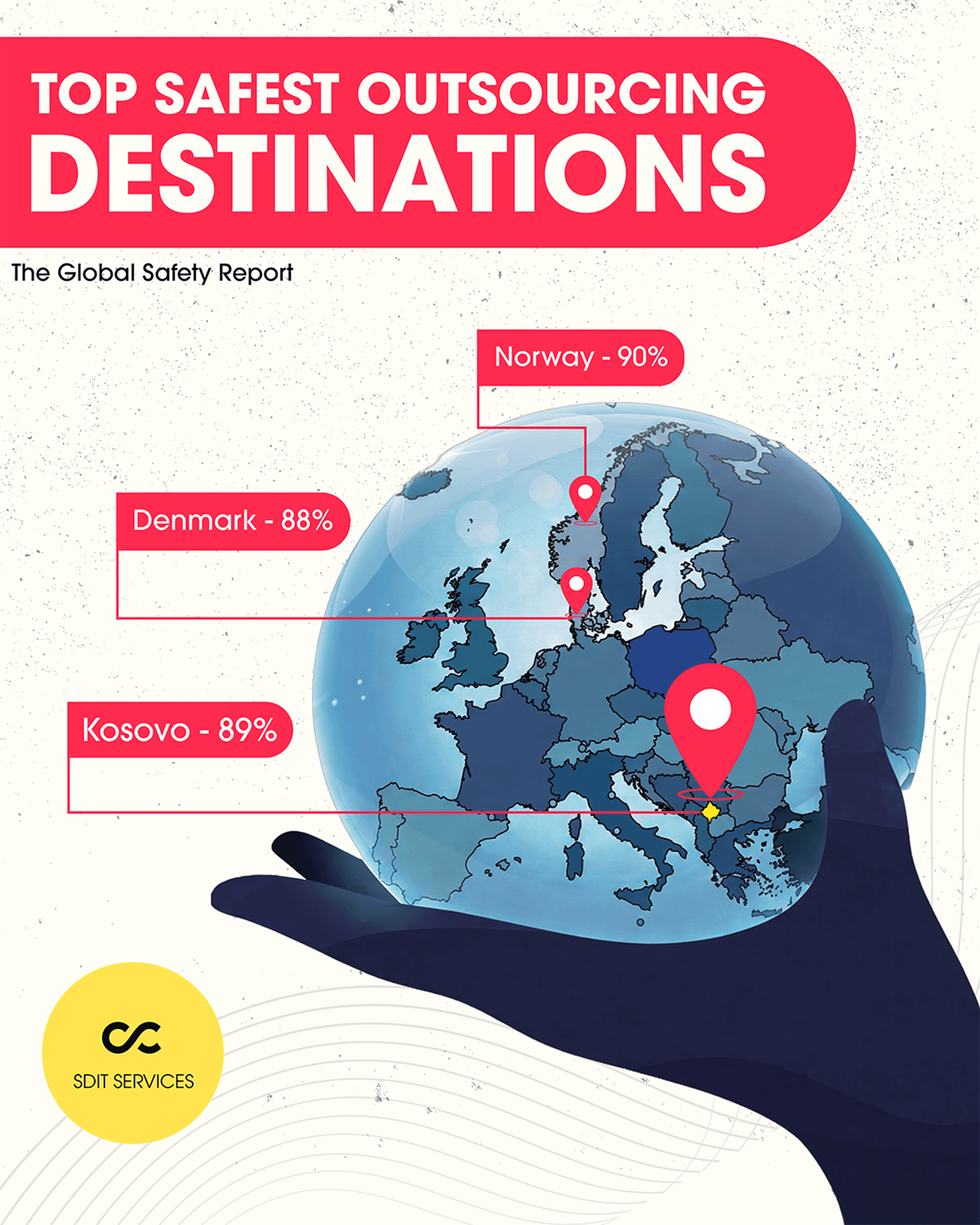
Kosovo Ranks Among the World's Safest Outsourcing Destinations (89%): What the Global Safety Report Means for Your Business
Read article
Technical Support
Why Growing Businesses Struggle with Efficiency (And How Better Processes Fix It)
Read article
Company
Website Redesign Checklist for Growing Companies
Read articleShare via
Summarize with AI
Copies a prepared prompt with this article title and URL, then opens your selected AI tool.